While birth control has many health benefits, it may lead to decreased libido in some cases.
Hormonal birth control methods use hormones to prevent ovulation or change the conditions in your uterus and cervix.
There are some hormonal medications that require daily use (short-acting) and others that your provider inserts into your arm or your uterus (long-acting).
Human Immunodeficiency Virus (HIV) is a global health concern.
HIV prevention is crucial. HIV can be prevented through three levels of prevention methods.
Primary Prevention
- Condom use
- Pre-exposure prophylaxis (PrEP)
- Male circumcision
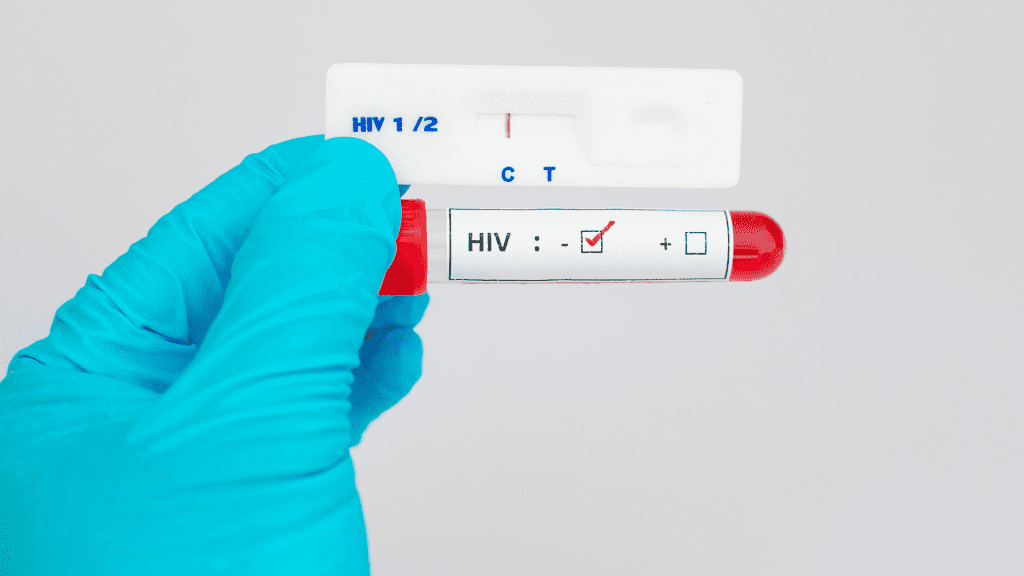
- Regular HIV tests in Malaysia
Secondary Prevention
- Focusing on antiretroviral therapy (ART) for people living with HIV
- Ensuring an undetectable viral load
- Practicing safer sex
Tertiary Prevention
- Ongoing medical care
- Mental health support to manage HIV-related complications
Among the methods, many have asked about the link between circumcision and HIV prevention. Circumcision has been linked to lower HIV risk.
This article examines how circumcision affects HIV transmission, the science behind it, and other concerns.
The Science Behind Circumcision and HIV Risk Reduction
Studies indicate that male circumcision can reduce the risk of heterosexual HIV transmission by up to 60%.
Some countries promote voluntary medical male circumcision (VMMC) as part of HIV prevention programs.
This is because circumcision removes the foreskin, which contains cells that are more susceptible to HIV infection. By reducing the surface area prone to exposure, circumcision lowers the likelihood of HIV being transmitted during vaginal intercourse.
It is a cost-effective and long-term solution.
In addition, protection (mainly in the form of condoms) is highly effective for men during vaginal sex because it provides a barrier against STIs.
How Does Circumcision Reduce HIV Transmission?
The foreskin contains a significant number of Langerhans cells, which are specialized immune cells that play a role in detecting and responding to infections, including HIV.
These cells are particularly susceptible to HIV because the virus can easily enter through them. During sexual intercourse, friction can cause microtears and skin abrasions in the foreskin, which provide entry points for the virus to infect the body.
By removing the foreskin through circumcision, these microtears and abrasions are significantly reduced, decreasing the likelihood of HIV transmission.
Additionally, the foreskin tends to trap moisture and create a warm, moist environment that is conducive to the survival of HIV.
Overall, circumcision offers a dual benefit by reducing both the physical pathways for the virus and the conditions that promote its survival, contributing to a lower risk of HIV acquisition.
Don’t hesitate to reach out to a circumcision clinic near you if you want to know more about the procedure.
Does Circumcision Protect Everyone from HIV?
Heterosexual Men
Circumcision is particularly effective in reducing the risk of acquiring HIV during vaginal sex. Studies show that circumcised men are at a lower risk (around 60%) of contracting HIV from an HIV-positive female partner, as it reduces the likelihood of microtears in the foreskin and lowers the chances of viral entry.
Men Who Have Sex With Men (MSM)
The protective effect of circumcision is less pronounced. While circumcision can reduce the risk of HIV transmission in some cases, anal sex involves a higher risk of tearing and exposure to the virus, making condoms and other preventive measures, such as pre-exposure prophylaxis (PrEP), far more effective in reducing HIV transmission for MSM. PrEP is readily available in most men’s health clinics in Malaysia.
Women & HIV Prevention
For women, circumcision does not provide direct protection. Women can still acquire HIV during vaginal sex, and their risk may be heightened if they have unprotected sex with either circumcised or uncircumcised men. In this context, women benefit most from using condoms, HIV testing near you, and other preventive strategies.
The Link Between Circumcision, Other STDs, and HIV
Circumcision has been shown to lower the risk of several sexually transmitted infections (STIs) such as human papillomavirus (HPV), syphilis, and herpes, by removing the foreskin, which can harbor viral infections and make the penis more vulnerable to damage during sexual activity.
Sexually transmitted infections (STDs) such as syphilis, herpes, and HPV can cause inflammation and the development of sores or lesions on the genital skin.
These sores create openings in the skin, making it easier for HIV to enter the bloodstream during sexual activity. Inflammation from STDs also weakens the body’s natural defenses, further increasing the susceptibility to HIV.
When the skin is irritated or damaged, the immune system is compromised, which facilitates the virus’s ability to penetrate and spread.
As a result, having an active STD significantly heightens the risk of HIV transmission, both for individuals with the infection and their sexual partners.
This is why addressing and treating STDs is crucial in preventing the spread of HIV, as the presence of an STD substantially raises the likelihood of HIV infection.
Why Circumcision Alone Is Not Enough to Prevent HIV
Getting professional adult circumcision near you has been shown to reduce the risk of HIV transmission, particularly in heterosexual men, by about 60%.
However, it does not eliminate the risk entirely.
While it provides an additional layer of protection by reducing the likelihood of HIV entering the body through the genital tissue, it is only one component of a comprehensive prevention strategy.
To achieve full protection against HIV, other methods such as consistent condom use, taking Pre-Exposure Prophylaxis (PrEP), and regular HIV testing are essential.
- Condoms act as a barrier to prevent the exchange of bodily fluids.
- PrEP is a medication that significantly reduces the risk of HIV infection for people at high risk.
- Regular testing allows for early detection and timely treatment, reducing transmission rates.
Ultimately, safe sex education and awareness, combined with early detection and the use of multiple prevention tools, remain the most effective strategies in preventing HIV and ensuring sexual health.
Conclusion
Circumcision can reduce the risk of HIV transmission in heterosexual men by lowering the chances of the virus entering the body during vaginal sex.
However, it is not a complete solution on its own and should be part of a broader HIV prevention strategy.
For optimal protection, circumcision should be combined with other preventive measures, such as consistent and correct condom use, which creates a physical barrier against the virus.
Additionally, taking Pre-Exposure Prophylaxis (PrEP) can significantly reduce HIV risk for those at high risk, and regular HIV testing helps with early detection and prevents unknowingly transmitting the virus.
Combining these methods provides a more comprehensive approach to HIV prevention.
Visit Universal Clinic, the best circumcision clinic in Kuala Lumpur and men’s health clinic in Kuala Lumpur for all your circumcision needs!